No two rugs that come out of a Greenacres home want the same treatment, so nothing here is a shortcut. Here is the order we work in, why each step exists, and the one time we will tell you a full wash isn’t worth doing.
Step one
Before anything is dusted or wet, we lay the rug out and read it. We measure it, note the wear, mark the spots, check the fringe and edges, and run the tests that tell us how it will behave in water.
That first look is also where the price is settled. You know what the rug needs and what it will cost before we begin, so nothing about the bill is a surprise when it comes home to Greenacres.
Reading the rug
Two things above all: the pH of the fibers and the stability of the dyes. A cotton foundation, a wool pile and a silk accent each react differently, and older vegetable dyes can let go the instant they meet water.
We towel-test the colors, look for previous repairs and any dry rot hiding along the back, and flag pet contamination that a nose alone would miss. If a rug is a bleed risk, the method changes right here — before a drop of water is anywhere near it.
None of this is guesswork. It is the difference between a rug that comes back the way you remember it and one that comes back damaged.
Dry soil first
A surprising amount of what weighs a rug down is dry grit sitting at the base of the pile — fine sand, tracked-in dirt, the grey powder that lawns and lakeside paths leave behind in this part of Palm Beach County.
If that grit meets water first, it turns to mud and grinds against the foundation with every step for years afterward. So we drive it out dry: the rug is thoroughly dusted, both sides, until the loose soil stops falling. Only then is it ready to be washed.
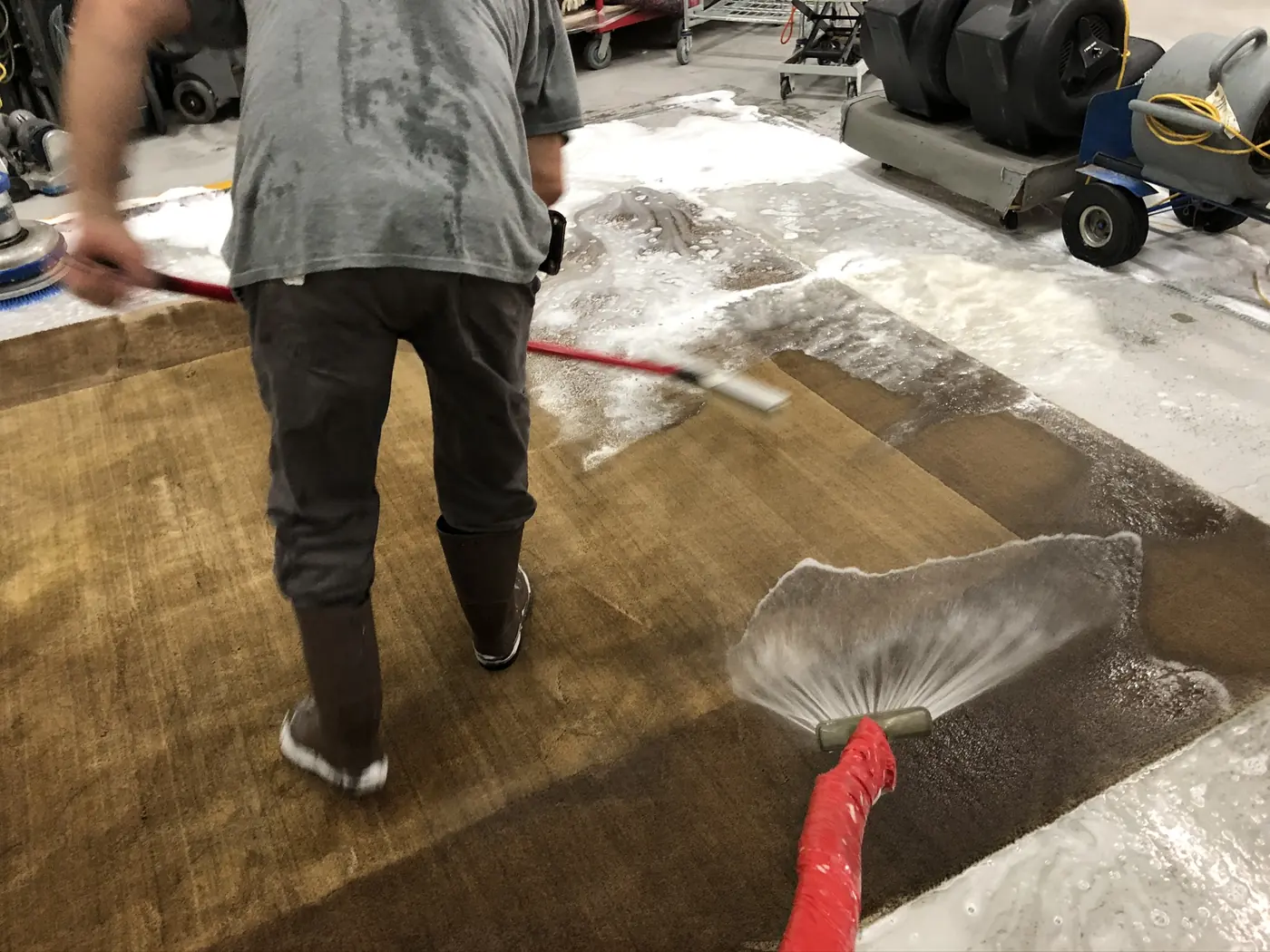
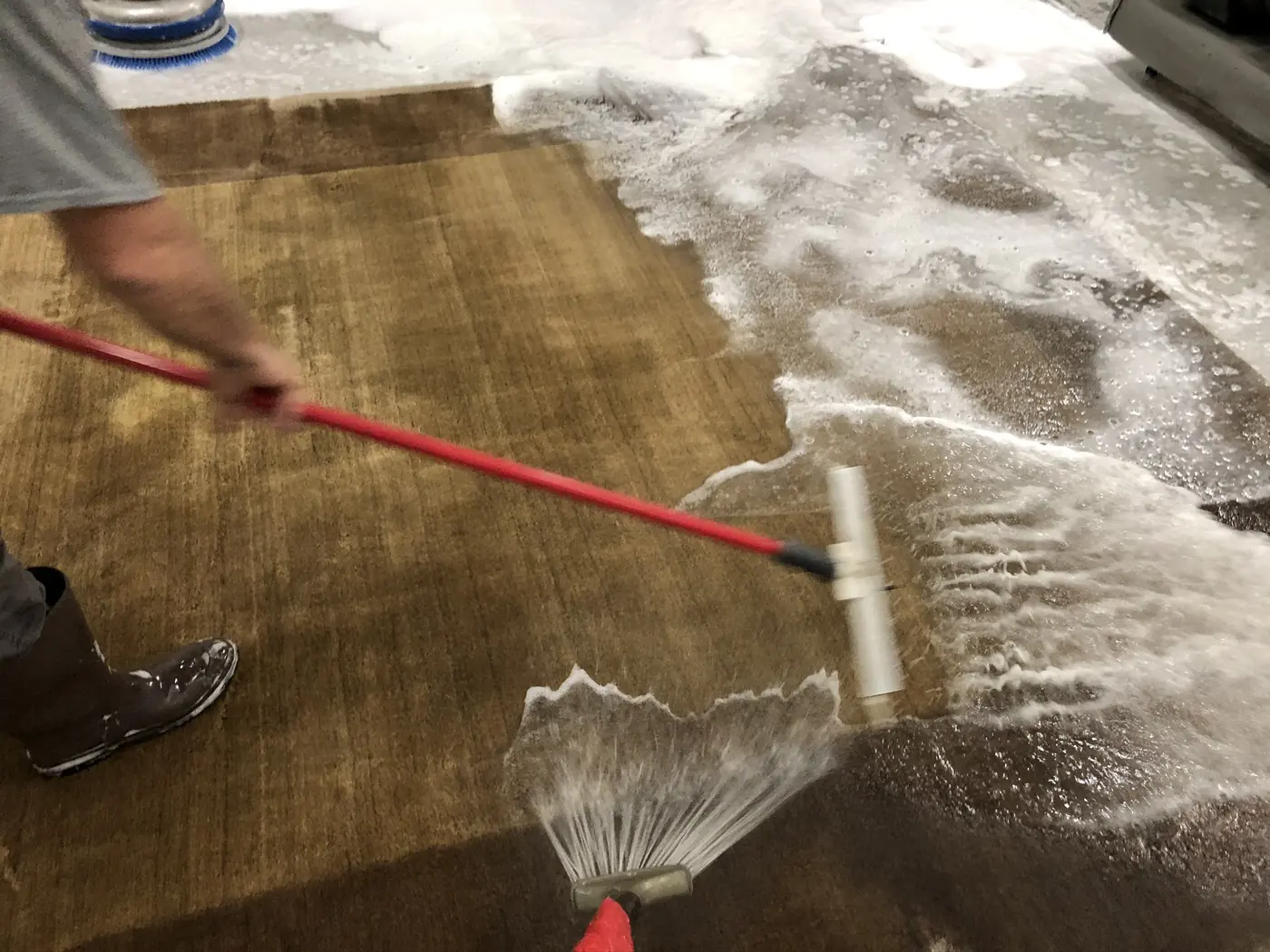
The rug is laid flat, saturated, and worked over with a natural pH shampoo, then rinsed until the water finally runs clear. There is no wand, no scrubbing it in place — just the full submerged bath a hand-knotted rug was built to take.
The step that protects color
Drying is where cheap rug cleaning quietly goes wrong. A rug left damp on a floor in Greenacres humidity dries slowly and unevenly, and slow drying is precisely when one color creeps into the next and a musty smell settles in.
We move the rug into a temperature and humidity controlled room and dry it fast and evenly. Controlled airflow pulls the moisture before the dyes have any chance to migrate, which is what keeps the whites white and the reds where the weaver put them.
The finish
Once it is fully dry, the pile is brushed back into its natural lay and the fringe is combed straight. We give it a last inspection against the notes from intake, so nothing we promised to address gets missed.
Then it is rolled, wrapped, and delivered back to your door — pickup and delivery only, free across Palm Beach County. You never have to move it yourself.
The honest part
Sometimes the right answer is not the plant. A newer synthetic or machine-made rug that is only lightly soiled may be fine to freshen where it sits, and we will tell you that rather than charge you for a pickup you don’t need.
The same honesty runs the other way with fragile antiques: if a full wash would take more out of the rug than it puts back, we say so before you spend anything. Our aim is a rug that lasts, not a job on the schedule. See how we handle repairs, or how we treat pet accidents.
Free pre-inspection, zero pressure
Send us a few details and we’ll set up a free pickup, then walk you through exactly what your rug needs and what it will cost.
A brief look at the in-plant work.